Dog sledding in Drevsjø
A practical guide to polar dog tours, huskies, and winter silence near Femund lake.
Run with the dogs through real wilderness
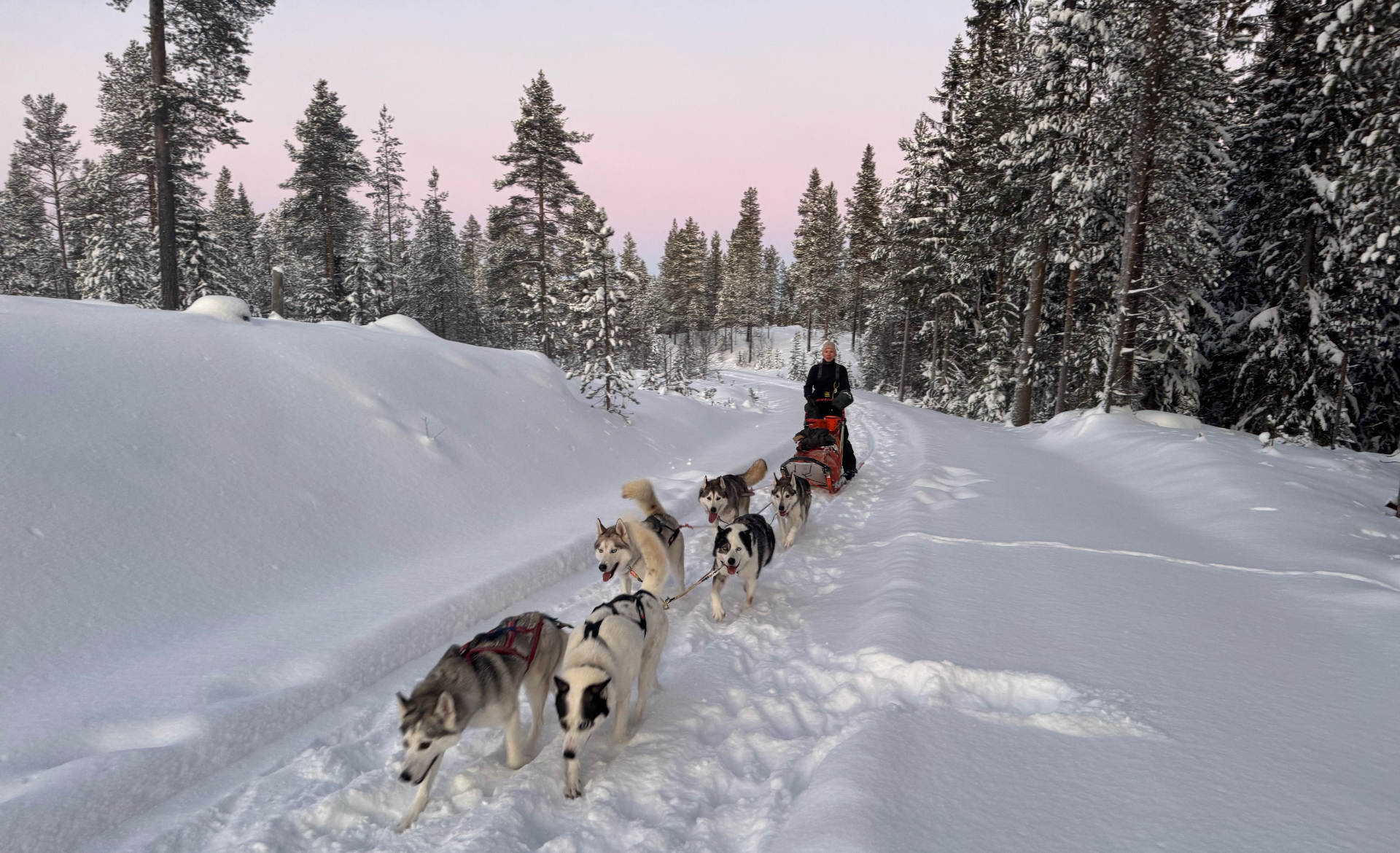
Dog sledding in this region is a magical experience. And the huskies doing the job love to pull and run. They are not your everyday house pet.
If you are searching for dog sledding in Norway, the area around the magnificent Femund Lake is one of the most authentic corners of the country to do it. The area is remote, the winters are long and cold, and the trails run through the same forests that moose, reindeer, and wolverines use. It is a working wilderness, and the dogs love it here.
A testament to this being dog-sledding heaven is that the world's largest dog-sledding competition, Femundløpet, goes through this region.
Drevsjø is one of the largest checkpoints at the race, and up towards 600 dogs can be resting at the Drevsjø checkpoint simultaneously.
Why dog sledding in Drevsjø feels different
Drevsjø sits in the heart of reindeer land, close to the Swedish border and the vast expanse of Femund lake. The cold record here is -47°C, and the snow season is long and reliable. That combination of deep snow, frozen lakes, wide forests and barren mountains makes it ideal for dog sledding. The sound of the runners on packed snow, the panting of the team, and the absolute silence between commands is the kind of experience people remember for decades.
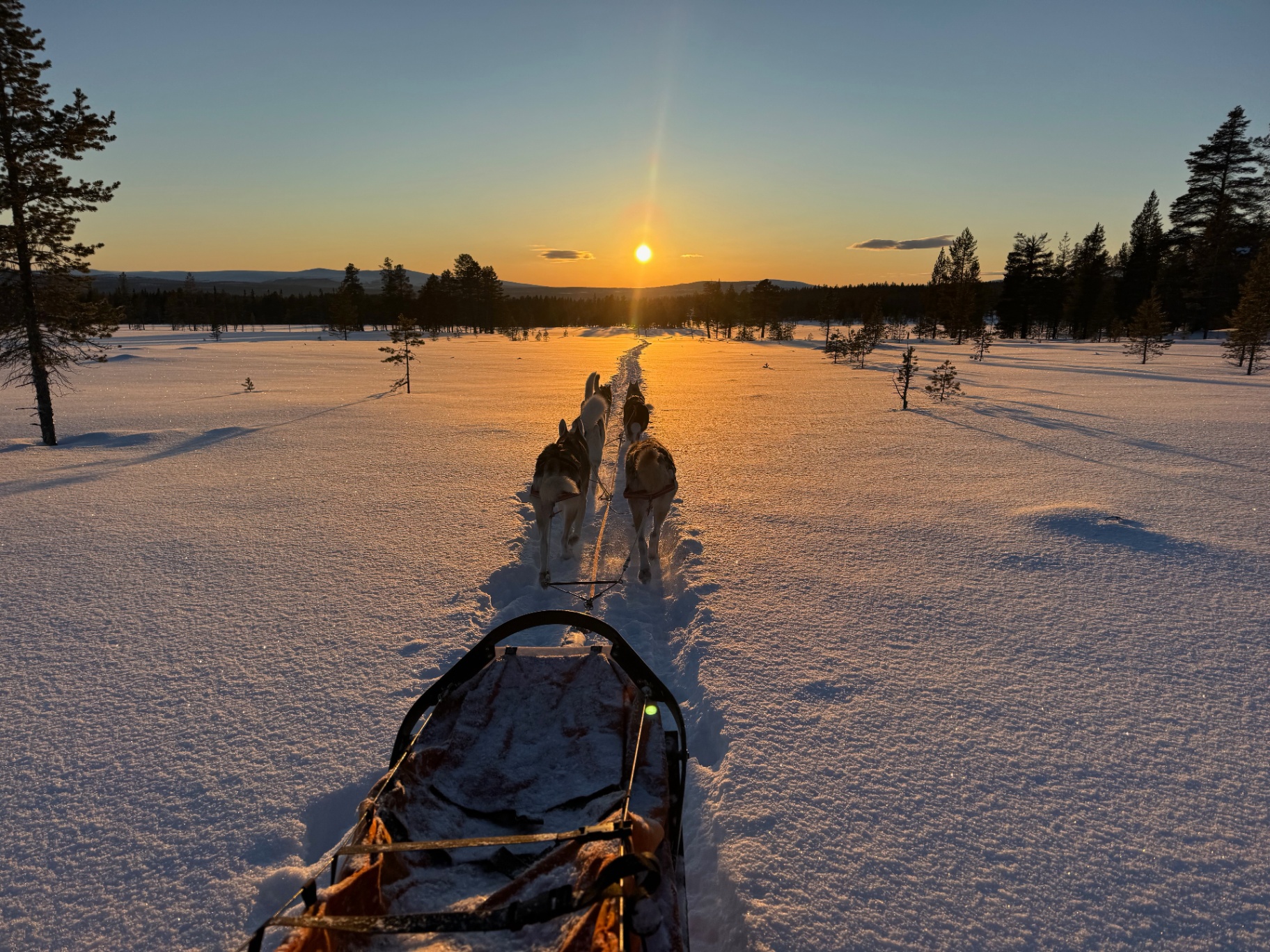
The landscape is also varied. Runs can cross frozen lake edges, climb gentle forest ridges, follow old logging roads, and pass through birch valleys. On a clear winter day, the light is pale blue and gold. On a snowy evening, the headlamp catches the flakes and the forest feels like a different planet.
Polar dogs and the farm
At our farm we keep a small kennel with polar dogs of the Siberian Husky breed. These dogs are not pets in the ordinary sense. They are working animals with a deep instinct to run in harness, and they are happiest when they are doing what they were bred for. Living on a historic forest ranger farm in the coldest part of Southern Norway suits them well. The climate, the space, and the trails are what their ancestors evolved for.
We do not run commercial tourist tours with our own dogs. Instead, we point our guests to people who specialize in it. That is why we work with Norse Quest Husky Tours, a local kennel at Sorken, just a short distance from the farm. They know the terrain, they know the dogs, and they know how to share the experience without turning it into a production line.
Norse Quest Husky Tours at Sorken
Norse Quest Husky Tours runs dog sledding trips near the Femund lake. Their base at Sorken is close enough to our farm that you can easily combine a sledding day with a stay at the farm. It´s a 20 minute drive from our farm to the their kennel. The tours are small, guided, and focused on the dogs and the landscape rather than on rushing through a set route.
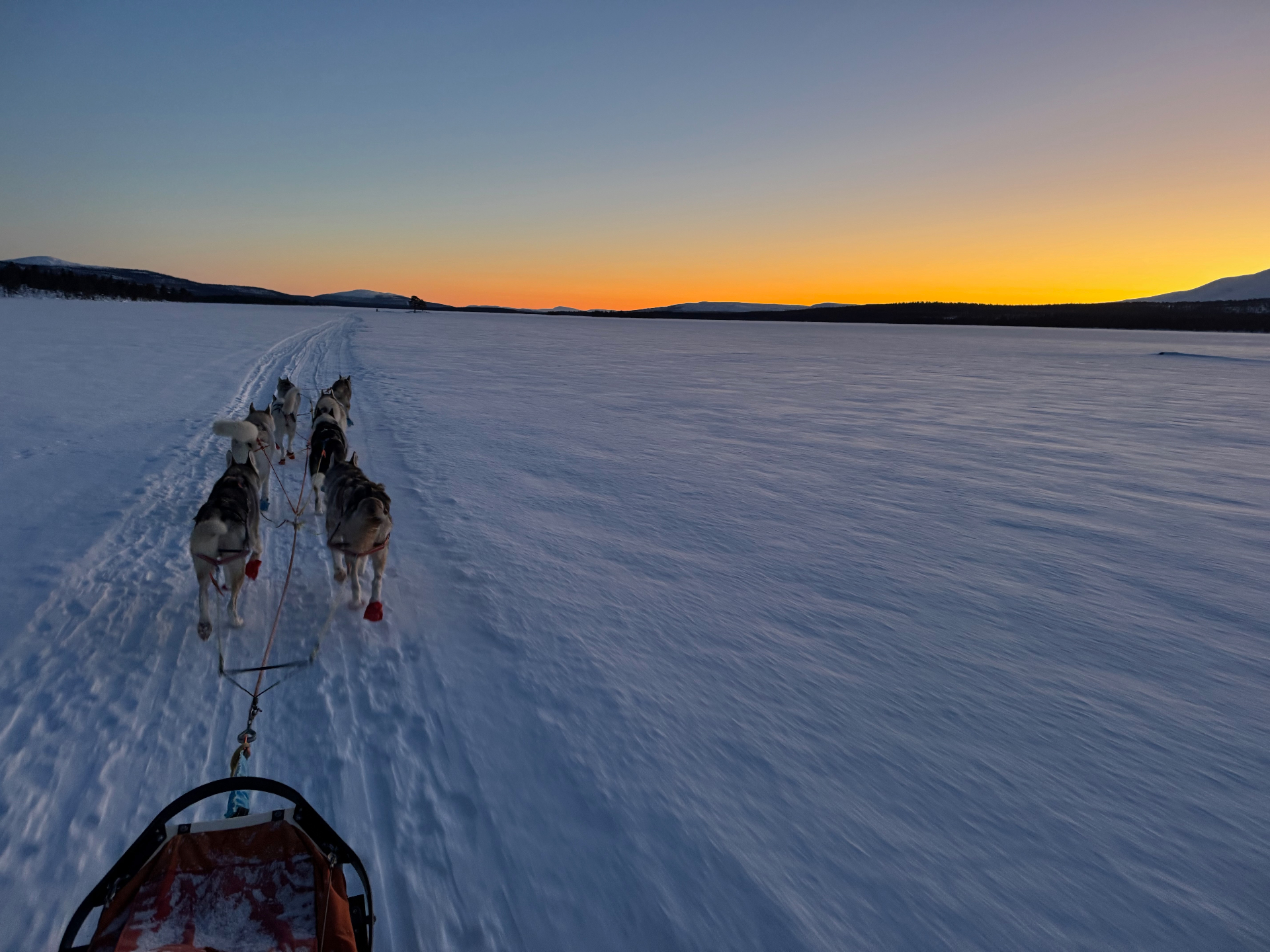
A typical trip begins with meeting the dogs. You learn how a team is harnessed, how the sled behaves, and what commands the dogs understand. Then you head out. Depending on the day and the snow, you may run across open lake flats, through pine forest, or along old tracks used by forest rangers and reindeer herders. The guides handle the dogs, but guests are often invited to take an active role if they feel comfortable.
What to expect on a sledding day
- Warm clothing is essential. Even on a bright day, the wind on a frozen lake can be biting. Layers, windproof outerwear, good mittens, and a warm hat are non-negotiable.
- The pace is steady, not extreme. Sled dogs are built for endurance, not speed records. The rhythm is part of the magic.
- Silence is the point. Once the dogs settle into their pace, the only sounds are the sled, the snow, and the dogs. It is the closest many people get to real stillness.
- Children and beginners are usually welcome. Most operators can adjust the trip to the group. If you have very young children or specific needs, ask when you book.
Best season for dog sledding near Femund lake
The reliable sledding season runs from December through April, with the deepest and most stable snow usually from January to March. That is also when the days are short and the chances of aurora are highest. In some years, you can still run in late November or early April if conditions allow. Because the region is one of the coldest in Southern Norway, the snow stays longer than on the coast.
Where to stay
Our farm is a historic forest ranger home at Kopparleden 1001 in Drevsjø. It is an authentic wilderness stay, not a polished cabin. The house is old, the surroundings are wild, and the location puts you next to the trails, the lake, and the dog sledding base at Sorken. You can book our farm through Airbnb and use it as your base for sledding, wildlife watching, and exploring the area.
Ready to book a dog sledding trip?
Visit Norse Quest Husky Tours to check dates and availability.