
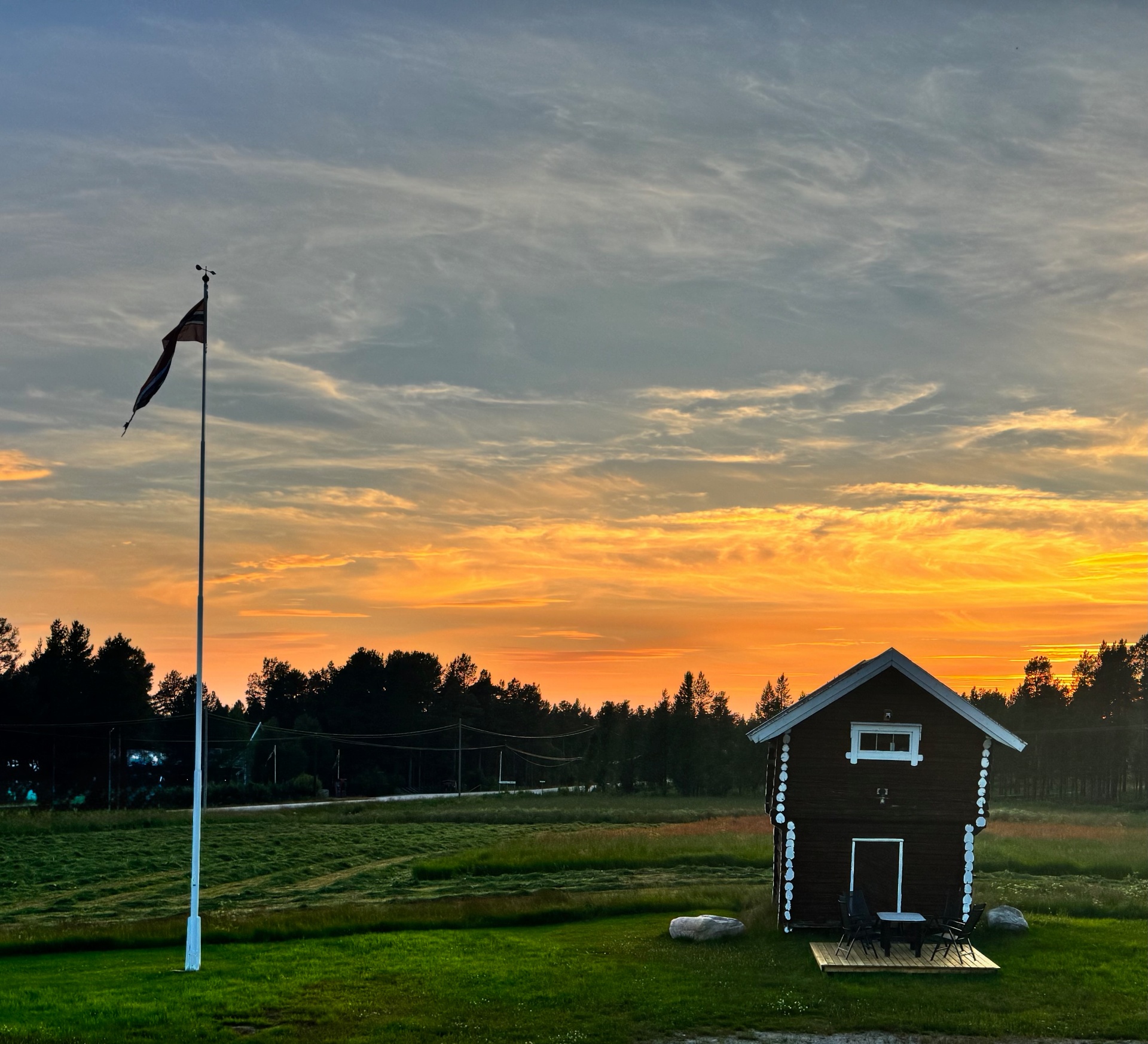
History you can feel
Forest Ranger Farm is more than a guest house. It is a preserved piece of Norwegian wilderness heritage.
The buildings at Kopparleden 1001 were originally built as a forest ranger home for the Norwegian government. For generations, rangers lived here, managing the forests, knowing the land, and leaving behind a sense of purpose that still lingers in the rooms.
In the beginning, it was just a modest one-story timber house with a little cowshed, where forest ranger Peder Reiersen, born 1870, lived together with his family. After his passing, his son took over and began shaping the farm into what it is today. A second floor was added to the house, the barn grew bigger, and little by little the place transformed.
Forestry was historically the lifeblood of wilderness communities in this region. And the forest rangers had an important job on behalf of the Norwegian state, patrolling for illegal logging and managing state-owned forests.
The region supplied massive amounts of wood (charcoal) for the Røros Copper Works.
The address "Kopparleden" reflects this activity, as the address name translates to The Copper Trails. Historically, Kopparleden extended all the way from Røros to Falun in Sweden, a stretch of about 400 kilometres. The copper was transported by horse and sledge during winter. Prior to the availability of roads, one can imagine the hardship of this mode of transport for both humans and horses.
Later, the farm served as a plant nursery school for some time.
Historically, there was also a bakery at the farm to provide food for navvies working on building roads in the area.
The house is old, unpretentious, and deeply authentic.
German guests recently told me they fell in love with exactly that — the way the farm refuses to be anything other than what it is.
As owners of the farm, we feel a deep responsibility to maintain its historic legacy and preserve the house and farm buildings.
New to the farm are some Siberian Huskies living in their winter paradise 🐕. Also an ancient breed of dogs that fit well with a historic wilderness farm.
The farm from the ground
An undated photograph, likely taken long before 1963, reveals how the courtyard once looked.
This undated photograph shows the farm before the courtyard took its present shape. The storehouse on the left stands where the driveway into the courtyard is today, so it has been moved since the photo was taken. The building between the storehouse and the main house has since disappeared; it may have been the bakery that once supplied food for the navvies building roads in the area.
Image reference: DSS.792931
The farm from above
Aerial photographs from 1963 and 1996 show the farm and the neighbouring tar kiln, later transformed into a camping site, set against the same forests and hills that still surround us today.
Forest Ranger Farm, 1963 — the red barn and white timber house nestled between fields and endless pine forest.
Source: Widerøe Flyveselskaps flyfoto fra Engerdal kommune, Norge / Hedmark / Engerdal / Drevsjømoen — National Library of Norway.
Forest Ranger Farm, 1996 — the white house, red barn, and a yellow car by the road.
Source: Fjellanger Widerøe 1996 [96701340], Norge / Hedmark / Engerdal / Drevsjø — National Library of Norway.
Across from the farm, 1963 — the tar kiln by the water. Today this spot is a camping site.
Source: Widerøe Flyveselskaps flyfoto fra Engerdal kommune, Norge / Hedmark / Engerdal / Drevsjø — National Library of Norway.
Across from the farm, 1996 — the old tar kiln area is now a camping site by the water.
Source: Fjellanger Widerøe 1996 [96701348], Norge / Hedmark / Engerdal / Drevsjø — National Library of Norway.
Forest Ranger Home
Built to house one of the State forest rangers who managed these vast forests. The location was chosen for access, visibility, and self-sufficiency. The barn at the farm also contains a historic fireplace (under renovation). In this part of the barn, animals were kept, and because of the harsh winters, the fireplace kept them warm. The fireplace was also used to melt snow for water.
Plant Nursery School
The farm later became a plant nursery school as forestry was a key industry for the region.