
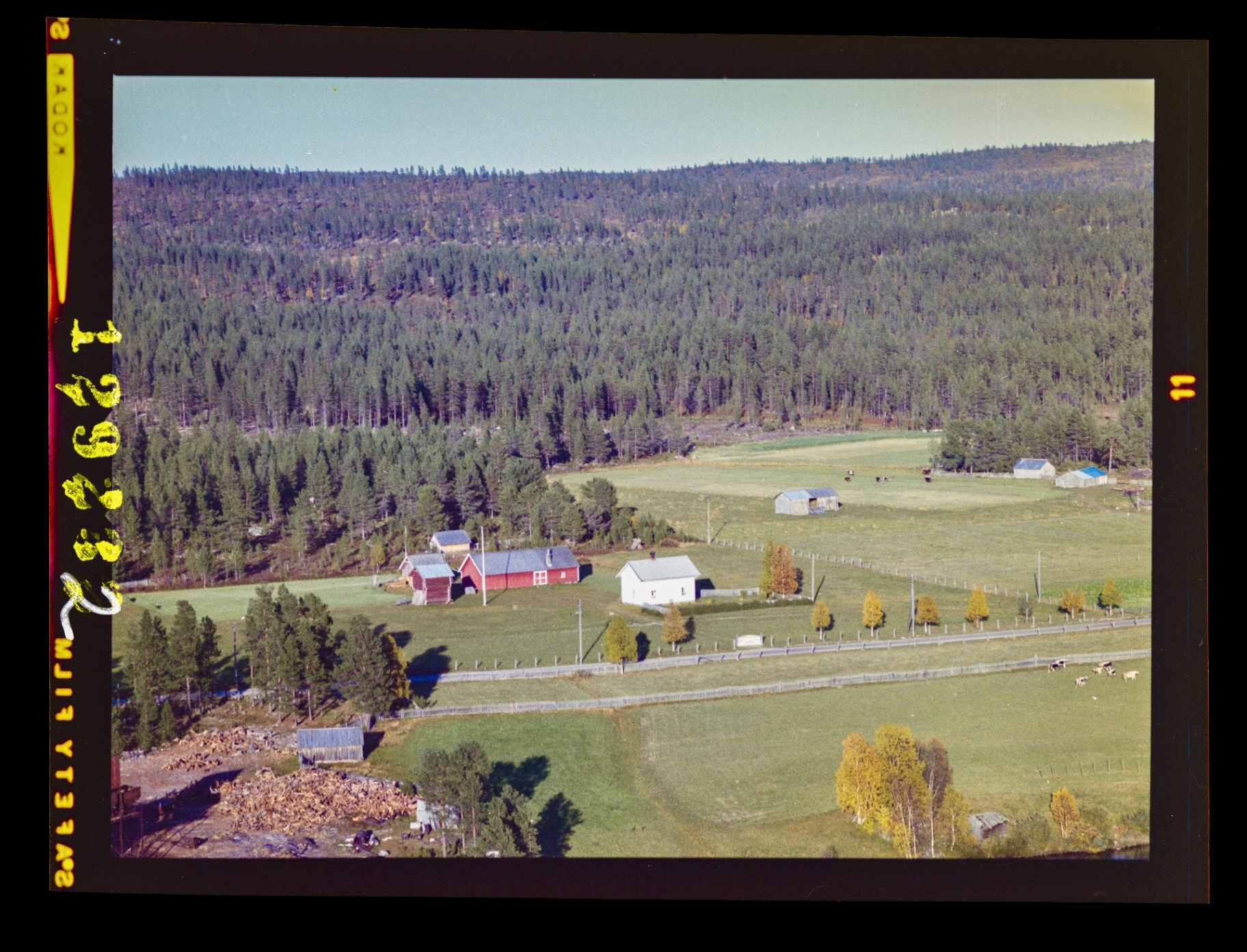
Forest Ranger Farm in 1963
In 1963, a camera passed over the forest near Drevsjø and captured two photographs that still feel strangely alive. One shows the farm at Kopparleden 1001 with its red barn and white timber house nestled between fields and pine. The other shows the tar kiln across the way, beside a small lake, on land that is now a camping site. The buildings, the forest, and the hills are the same ones that surround the farm today.
The farm was originally built as a forest ranger home for the Norwegian government. A forest ranger here did not simply patrol trees. He managed state-owned land, kept an eye out for illegal logging, and lived with the knowledge that this part of Innlandet was one of the coldest and most remote corners of Southern Norway. Forestry was the lifeblood of the community, and the farm was placed where it could oversee both the woods and the access routes.
The address itself tells part of the story. Kopparleden translates to The Copper Trail. The name stretches back to the old route between the Røros Copper Works in Norway and the copper mines at Falun in Sweden, a distance of roughly 400 kilometres. Before modern roads, copper was moved by horse and sledge in winter. The winters here are long and bitter — Drevsjø holds the cold record for Southern Norway at -47°C — and the men and animals who made that journey carried far more than ore.
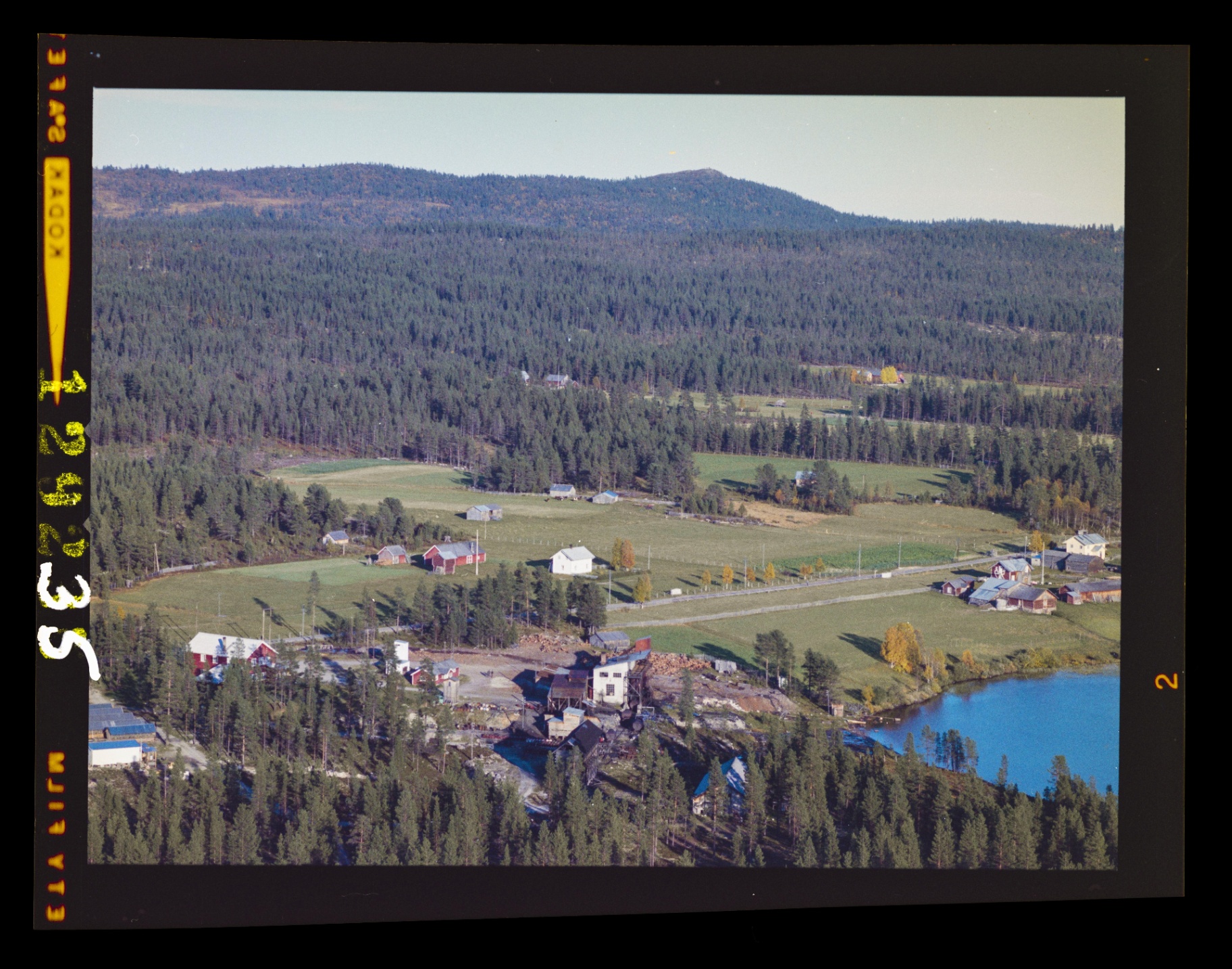
The second photograph shows the tar kiln that once stood across from the farm. Tar was produced by burning resinous pine wood in a controlled way, and it was essential for preserving timber, ropes, and ships. The kiln needed a reliable water source and plenty of forest, which is exactly what this hillside offered. Today the same spot is a campground, which feels fitting: a place that once supplied a basic wilderness industry now offers travelers a place to rest.
The farm later became a plant nursery school, another chapter of the forestry story. Young trees were raised here for replanting across the region, continuing the cycle that had defined the area for generations. Eventually the property passed into private hands, and it is now slowly being restored as a guest farm — still surrounded by the same forest, still feeling like the edge of the wild.
What strikes me most about the 1963 photographs is how little has changed. The buildings are older now, but the forest is the same, the fields are the same shape, and the silence is the same. When German guests recently told me they fell in love with the house because of its authenticity, I understood what they meant. The farm is not trying to be a museum or a luxury lodge. It is simply a place that has been here for a long time and still has work to do.
You can read more about the full history of the farm on our The Farm page, or explore the forest and wildlife that surround it today.