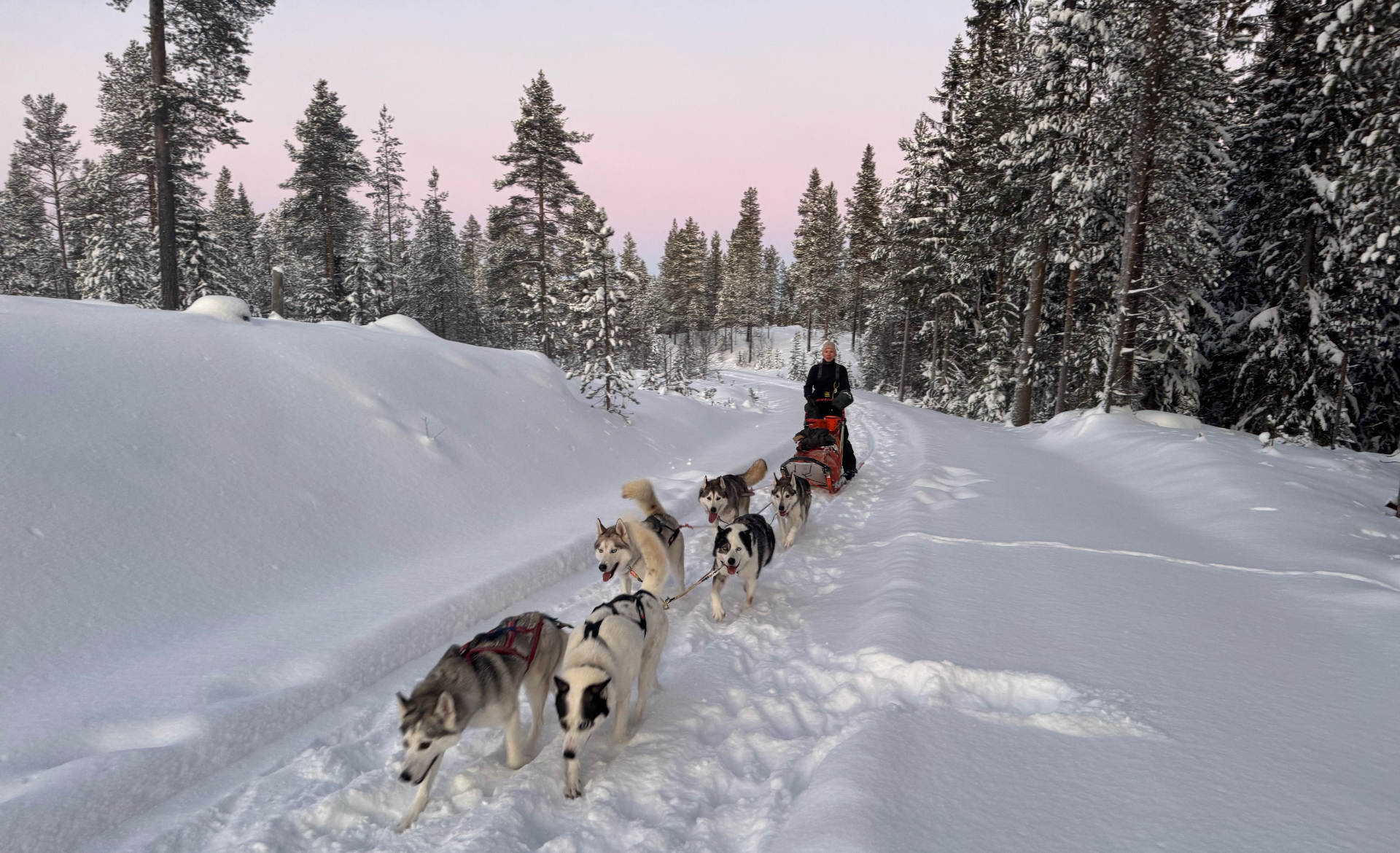
Dog sledding through the Femund wilderness
There is a particular silence that comes with dog sledding. Once the dogs settle into their pace, the only sounds are the runners on the snow, the breathing of the team, and the occasional command from the guide. The forest around Drevsjø is wide enough that you can travel for hours without seeing a road, a house, or another person.
At our farm we keep a small kennel of Siberian Huskies, but we do not run commercial tours with them. Instead, we work with Norse Quest Husky Tours at Sorken, just a 20-minute drive from the farm. They know the dogs, the terrain, and how to share the experience without turning it into a production line.
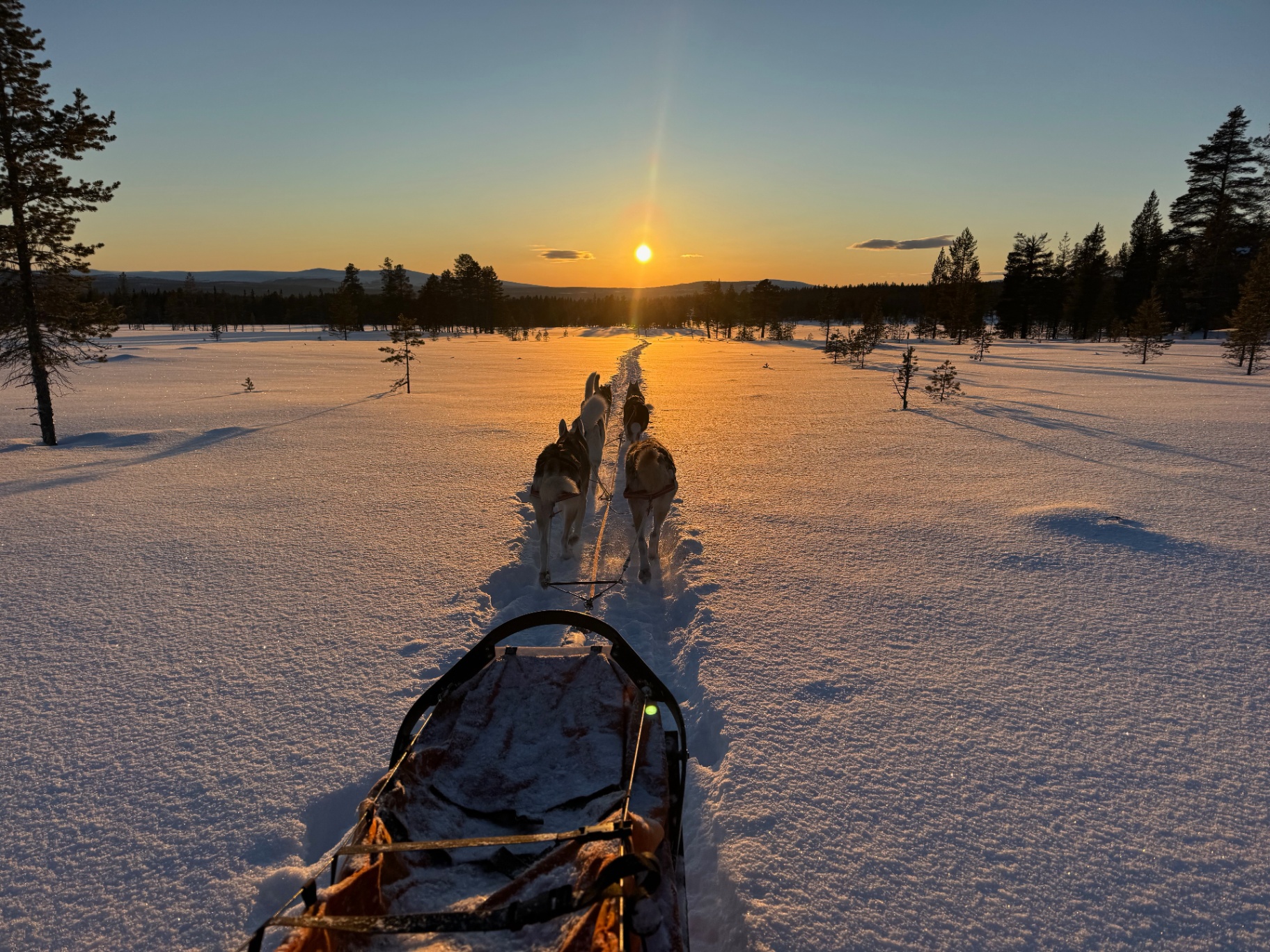
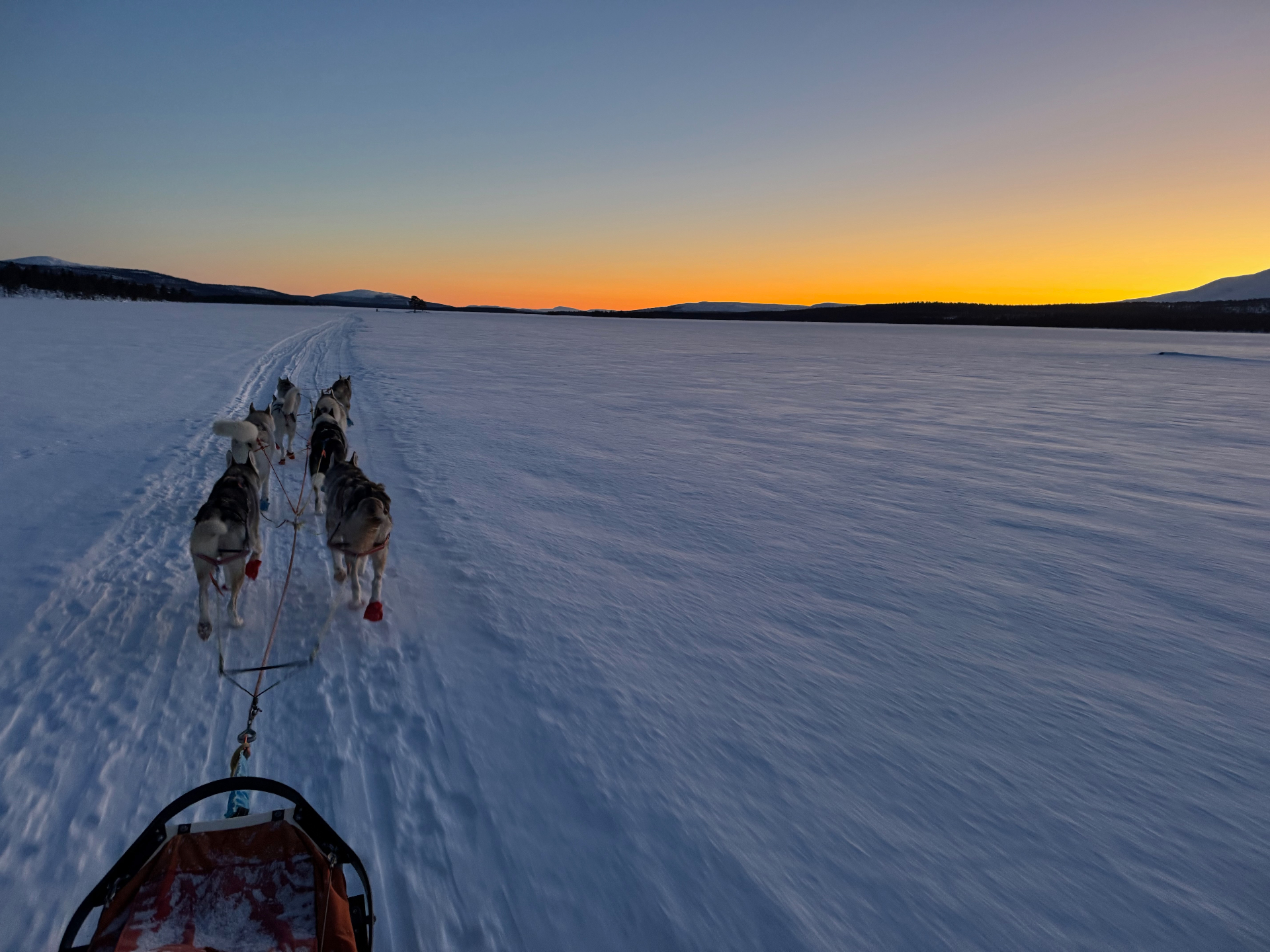
A typical trip begins at the kennel. You meet the dogs, learn how the harnesses work, and get a sense of how a sled behaves on the trail. Then you head out. Depending on the snow and the day, the route may cross open lake flats, climb gentle forest ridges, or follow old tracks used by forest rangers and reindeer herders.
The reliable season runs from December through April, with the deepest snow usually from January to March. Because Drevsjø is one of the coldest places in Southern Norway, the snow stays longer and the winter daylight is short and golden. In some years, you can still run in late November or early April if conditions allow.
If you are curious about seasons, clothing, and what to expect, the full dog sledding guide covers the practical details. And if you are ready to book, Norse Quest Husky Tours handles the reservations directly.